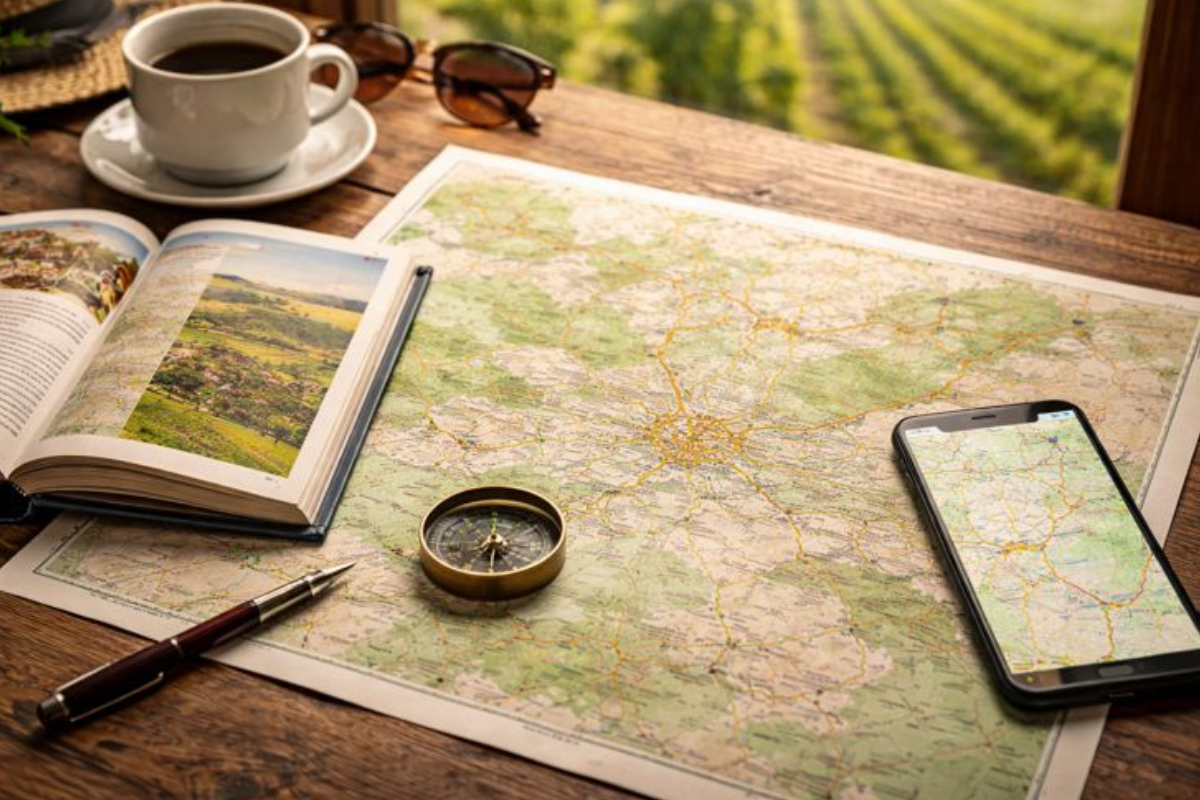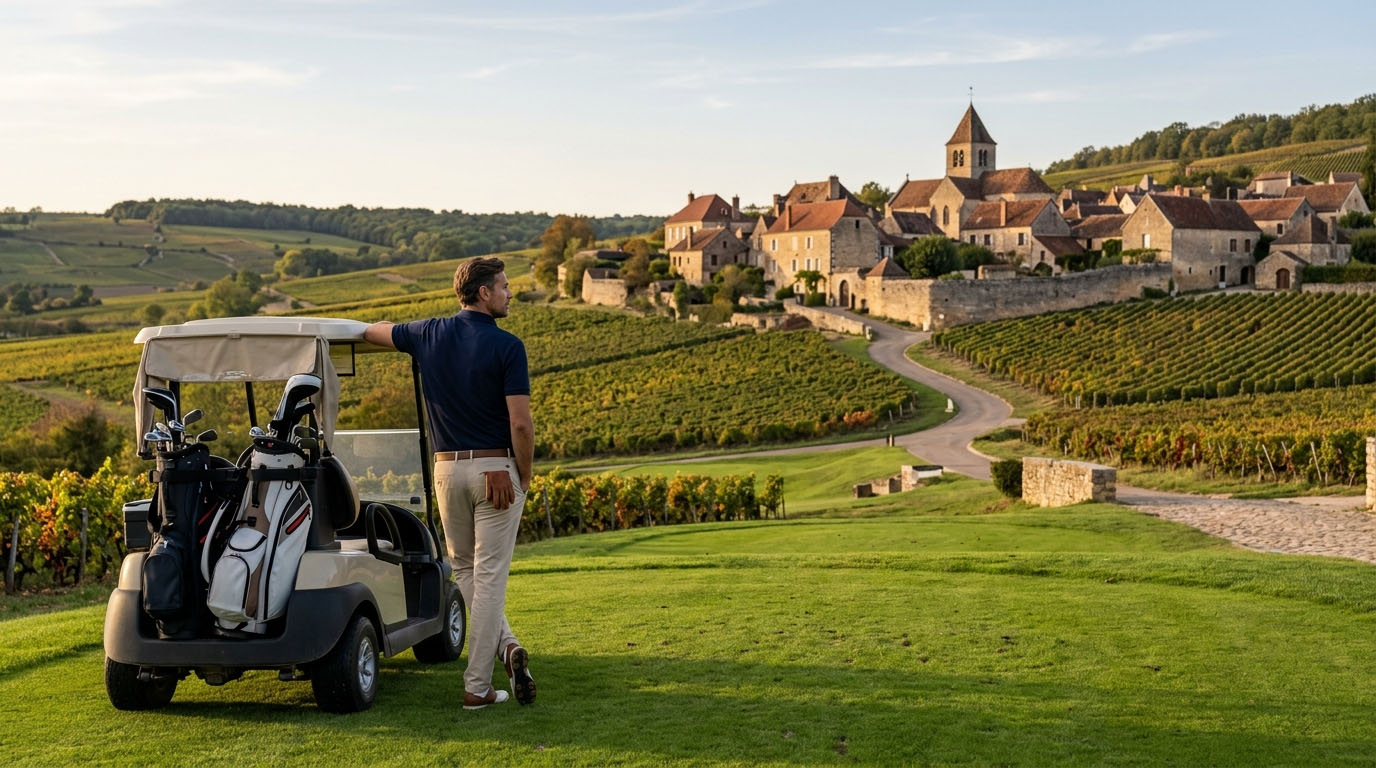
Burgundy rewards anyone willing to slow down. A golf trip can easily begin with tee times and scorecards, yet the real charm of this region often starts once the clubs are back in the car. One hour you may be standing on a fairway with vineyard views, and the next you are wandering through a market square, tasting Époisses at a cheese counter, or stepping into a Romanesque church that has shaped local life for centuries. That is what makes a golf holiday here different. The game gives structure to the days, but Burgundy gives them texture, memory, and depth.
For travelers who already enjoy planning practice sessions and improving their swing, a useful golf training guide can help make the sporting side of the trip feel purposeful before you even arrive. But in Burgundy, the most satisfying itinerary rarely stays focused on golf alone. This is a region of old stone towns, vineyard roads, river valleys, monastery ruins, village lunches, and landscapes that seem designed for long detours. If you are coming for a cultural trip and golf happens to be one part of it, the smartest approach is to build your days around contrast. A morning on the course can sit beautifully beside an afternoon in Beaune, a cellar tasting in Chablis, or a walk through Vézelay at sunset.
In Brief
- Use golf as one part of a slower Burgundy itinerary rather than the whole trip.
- Pair tee times with wine villages, food markets, abbeys, river towns, and scenic drives.
- Focus on places that reveal local character through architecture, food, craft, and landscape.
- Leave room for unplanned stops, because Burgundy is best experienced at an unhurried pace.
Why Burgundy works so well for a golf trip with cultural depth
Some destinations ask you to choose between sport and sightseeing. Burgundy does not. Its scale is one of its great strengths. Distances between meaningful stops are often manageable, and the region’s pleasures are spread across towns, villages, vineyards, historic sites, and open countryside rather than concentrated in one overwhelming city. That means you can play a morning round, enjoy lunch in a wine village, and still have time for a museum, a church, or a slow drive through the Côte d’Or before dinner.
It also helps that Burgundy’s identity is so layered. It is not only a wine region, though wine is everywhere. It is also a place shaped by monastic history, ducal power, Roman settlement, pilgrimage routes, cattle farming, market traditions, and a strong sense of local food culture. A golf traveler does not need to become a historian to appreciate that richness. You simply need to build a trip that makes room for it. A fairway can show you the landscape. The town beyond it explains why the landscape looks the way it does, how people have lived in it, and what they have made from it.
Build the day around one strong cultural anchor
The easiest way to make a golf trip feel richer is to avoid trying to squeeze culture into the leftovers of the day. Instead, give each day one anchor that matters in its own right. That anchor could be a historic town, a market, a vineyard route, or a major heritage site. Golf then becomes part of the rhythm rather than the sole event. This approach makes the trip feel less like a sporting schedule and more like travel with shape and variety.
Beaune is an obvious example. If you play in the wider wine country area, it makes sense to reserve real time for the town itself. Its streets, courtyards, wine merchants, and civic history reward more than a quick lunch stop. The setting around the heart of Burgundy wine country captures much of what visitors imagine when they picture the region, but the town works because it combines beauty with substance. You can spend time at the Hospices de Beaune, browse wine shops, sit down for a proper meal, and still feel there is more to return for the next day.
Dijon works in a different way. It has the energy of a regional capital, but it still feels walkable and textured rather than overwhelming. A golfer staying nearby can use Dijon as the urban counterpoint to the rural calm of the course. Good museums, handsome architecture, mustard shops, markets, and old streets make it ideal for an afternoon or evening after sport. Burgundy is at its best when you keep alternating between these moods, active and reflective, open countryside and town life, precision on the course and curiosity everywhere else.
1. Spend time in Burgundy’s wine towns without turning the trip into a rush of tastings
Wine is part of the cultural language of Burgundy, but there is no need to treat every visit as a checklist of prestigious labels. A better approach is to use wine towns as places to understand how the region lives. Walk them. Notice the cellars, the stone houses, the church towers, the pace of the cafés, and the way vineyards begin almost at the edge of the streets. In Burgundy, wine culture is not separate from the landscape or the townscape. It is woven through both.
Beaune, Chablis, and the villages along the Route des Grands Crus each reveal a different side of that story. Chablis in particular is worth treating as more than a bottle name. The town and its surrounding vineyards sit in a cooler, northern setting with a distinct identity. If your route takes you that way, reading up on Chablis beyond the vineyards before the trip can help frame what you are seeing on the ground, from the built environment to the agricultural rhythms that define the area.
The best wine related afternoons are often the simplest. Visit one cellar rather than four. Take a walk through the village before the tasting, not after. Order lunch somewhere that serves local bottles by the glass and ask for a recommendation from the staff. If the weather is good, sit outside and watch how the village moves around you. Golf travel often runs on tight timing, but Burgundy improves when you resist that instinct for at least a few hours.
2. Let lunch become part of the itinerary
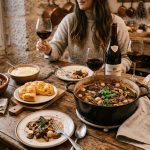
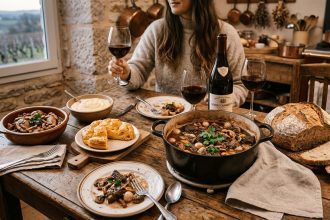
In Burgundy, lunch should not be treated as a logistical break between activities. It is one of the activities. That does not mean every meal has to be long or formal, but it does mean the region deserves more than a sandwich eaten in the car on the way to the next tee time. Food is one of the clearest ways to understand a place here. Menus reveal seasonality, local farming, old recipes, and the relationship between village life and surrounding land.
You might find œufs en meurette in a traditional bistro, jambon persillé on a starter menu, Charolais beef in a town known for livestock country, or gougères served with a glass of white Burgundy. In smaller places, lunch can be the moment when the day opens up. You hear local voices, see what people are ordering, and get a sense of the social pace that makes Burgundy feel grounded. Markets matter too. A market morning followed by a picnic can be every bit as memorable as a restaurant booking, especially if the weather is good and your morning round has left you wanting something relaxed.
If you are building a trip around both golf and culture, use food strategically. One day, book the lunch you are most excited about and place golf around it. Another day, make room for a village market and buy what looks good. A trip becomes more personal when some meals are planned and others are left open for instinct.
A simple way to pair golf with the rest of the day
| Time of day | Golf focus | Cultural pairing | Why it works in Burgundy |
|---|---|---|---|
| Early morning | Practice or 9 holes | Market visit and casual lunch | You stay active first, then settle into local food culture without rushing. |
| Morning to midday | Full round | Historic town walk in late afternoon | The physical part of the day is done, leaving space for slower sightseeing. |
| Late morning | Driving range or short session | Wine village lunch and one cellar visit | You still get golf into the trip without turning the day into a sporting marathon. |
| Rest day from golf | None | Abbey, village, scenic drive, long dinner | A golf trip feels fuller when not every day revolves around the same tempo. |
Historic places that justify a full detour
One of Burgundy’s great strengths is the density of meaningful historic sites beyond its headline towns. If you are the kind of traveler who likes a round of golf in the morning and a place with a strong sense of story in the afternoon, this region gives you plenty to work with. Roman remains in Autun, medieval hill towns, abbeys, pilgrimage sites, and village churches all offer different ways into Burgundy’s past.
Vézelay is one of the most rewarding examples because it feels dramatic even before you know the history. The hilltop setting, the long approach through the village, and the basilica at the summit create a sense of arrival that is hard to fake. Once there, the place opens into something larger than a photo stop. It becomes about pilgrimage, architecture, landscape, and the centuries of movement that passed through this part of France. Similar logic applies to Cluny, Semur en Auxois, Autun, and Châtillon sur Seine. None of them feels interchangeable, which is exactly why they belong in a trip that wants more than scenery alone.
If you have one day without golf, use it in a place with historical weight rather than trying to cram in three smaller stops. Burgundy’s older sites reward attention. Sit in the church for a few minutes. Walk the back streets, not just the postcard views. Look for the relationship between the site and the land around it. That is often where the region starts to make sense.
3. Use the road itself as part of the experience
Burgundy is a region where driving can be genuinely pleasurable, not just functional. The distances between villages, river valleys, vineyard slopes, and market towns are often short enough to keep the day feeling fluid, but long enough for the landscape to change in interesting ways. A golf trip becomes richer when you stop treating travel time as dead time. Some of the most memorable moments happen between destinations, especially if you leave enough flexibility for a viewpoint, a bakery stop, or a village you had not planned to enter.
The classic example is the Route des Grands Crus, but there are many other roads worth taking slowly. River valleys bring a softer mood. The Morvan edge introduces woodland and hill country. Northern Burgundy can feel more spacious and understated than the postcard vineyard belt, which is part of its appeal. If you are playing on different days in different parts of the region, use the transfers between them to stitch together a more complete picture of Burgundy rather than defaulting to the fastest route every time.
This is also where a little advance reading helps. The region’s cultural institutions and heritage networks offer useful context on architecture, churches, museums, and historic monuments, and the official French heritage platform from the Ministry of Culture is a strong place to understand the significance of the sites you may pass on the road. Even a quick look before the trip can turn a roadside church or small museum into a stop you are glad you made.
Make room for villages that do not need a checklist
Not every stop needs to be a major sight. Some of the most satisfying places in Burgundy are villages where the pleasure lies in atmosphere rather than a formal attraction. You park, walk for forty minutes, buy something from a bakery, look into the church, and sit with a coffee while the day slows down. For a golf traveler, these pauses matter because they counterbalance the structured nature of the sport. A tee time is exact. A village wander is not.
Semur en Brionnais, small wine villages along the Côte, and quiet market towns all work well in this way. The point is not to collect them like trophies. The point is to let one or two of them become part of the emotional shape of the trip. You remember the shutters, the smell of lunch drifting from a restaurant kitchen, the sound of church bells, the feel of warm stone in late afternoon. Those memories often outlast the details of a round of golf.
- Pick one village with a lunch reservation and one without any fixed plan.
- Arrive early enough to walk before sitting down to eat.
- Step inside the church even if you only stay for five minutes.
- Check whether there is a local market day before finalizing the route.
- Leave at least one hour in the schedule with no purpose other than wandering.
Markets, craft, and the everyday life of the region
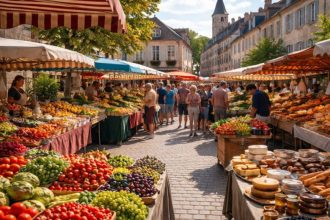
Culture is not only found in famous monuments. Burgundy’s everyday habits are just as revealing. Food markets, wine shops, bakeries, butcher counters, antique stores, and small museums all show how the region functions beyond the tourist gaze. Golf trips can sometimes create a bubble where you move from hotel to course to restaurant without much contact with ordinary local life. Markets break that pattern immediately.
A market morning is useful because it works on several levels at once. It is practical if you want picnic supplies. It is visual and social if you enjoy watching a town come alive. It is also educational without feeling formal. You see what is in season, what local people buy, and how regional identity is expressed through ingredients and routine. That matters in Burgundy, where food and wine are not separate luxuries but part of the region’s social fabric.
Craft traditions can add another layer. Even if you are not seeking out workshops, notice the objects that keep appearing, wine tools, kitchenware, textiles, books on local history, and produce tied to specific places. These details ground the trip. They turn Burgundy from a scenic backdrop into a lived region with habits and memory.
4. Give one day to landscape rather than monuments
It is easy to build a cultural itinerary around towns, abbeys, and tasting rooms, but Burgundy’s landscapes deserve their own time too. A golf course already places you outdoors, yet it frames nature through play. A walk, easy hike, or scenic drive shifts the perspective. You start noticing river curves, limestone slopes, wooded ridges, pasture, and vineyard geometry in a different way. This matters because landscape is one of the keys to understanding why Burgundy’s towns, farming traditions, and wines developed as they did.
The Morvan area, river corridors, and vineyard walking routes all offer good options depending on where you are staying. You do not need a strenuous hike. Even a modest trail before dinner or a riverside walk after lunch can change the tone of the day. If you have been focused on technique, timing, and score during a round, time in the landscape gives the mind a different task. It lets the trip breathe.
For couples or small groups where not everyone plays golf, this is especially helpful. One person can take a lesson or play nine holes while the others choose a walk, a market, or a museum, then everyone meets again for lunch or a winery stop. Burgundy suits this kind of split itinerary because its pleasures are varied and close together.
How to shape a four day golf and culture trip in Burgundy
If you want the trip to feel balanced, it helps to think in patterns rather than isolated activities. Here is one workable structure:
1. Day one, settle into the region with a lighter golf session, then spend the afternoon in Beaune or Dijon. Keep dinner relaxed and local.
2. Day two, play a full morning round, then give the rest of the day to a wine village and one cellar visit, with no pressure to see too much.
3. Day three, take a full break from golf and use it on a historic site such as Vézelay, Autun, or Cluny, with lunch in a nearby town and time for a scenic drive.
4. Day four, return to golf if you want another round, but leave the final afternoon open for a market, a village wander, or a long lunch before departure.
This structure works because it alternates intensity. One day asks for concentration and physical effort. The next asks for curiosity and patience. Burgundy responds well to that rhythm. It lets the sporting part of the trip feel satisfying without allowing it to flatten everything else.
What stays with you after the clubs are packed away
The best golf trips are rarely remembered only for the golf. In Burgundy, that is especially true. You may come home thinking about one excellent iron shot or a course framed by vines, but the memories that last tend to be broader. The light on an old stone in Beaune at the end of the day. A lunch that stretched longer than planned. The silence inside a basilica. A village lane that led nowhere in particular and still felt worth following. A bottle opened at dinner after seeing the vineyard it came from earlier that afternoon.
That is the real promise of going beyond the course on a cultural trip. Golf gives shape to the journey, but Burgundy fills it with meaning. The region asks you to look up from the scorecard and pay attention to what sits around the fairways, beyond the practice ground, and down the road from the clubhouse. If you do, the trip becomes larger than the game. It becomes a way of meeting Burgundy on its own terms, through food, history, landscape, and the quiet pleasure of taking your time.